
Between a Landing Page and a Website: Which Is Better? The Complete Guide
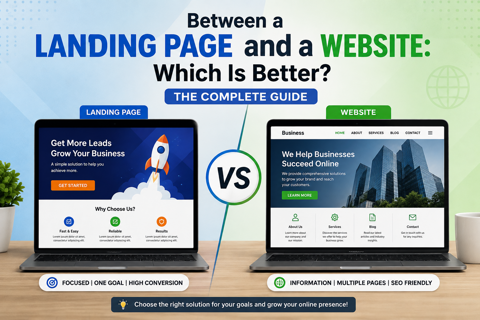
The truth is that there isn't a single "better" option. The right choice depends on your goals, budget, and what you want visitors to do after finding you online.
In this guide, you'll learn the differences between a landing page and a website, their advantages and disadvantages, real-world examples, and how to decide which one is right for your business.
What Is a Landing Page?
A landing page is a single web page created with one specific objective. It is designed to encourage visitors to take one action, such as:
Buying a product
Filling out a contact form
Booking a service
Downloading an eBook
Signing up for a newsletter
Contacting your business through WhatsApp
Unlike a traditional website, a landing page removes distractions and focuses on one clear call to action.
Example
Imagine you run a web design business in Nairobi.
Instead of sending Facebook ad traffic to your homepage, you create a landing page titled:
Affordable Business Websites in Kenya – Starting from KSh 35,000
The page explains your service, showcases a few completed projects, includes customer testimonials, and ends with a "Chat on WhatsApp" button.
Because visitors have only one action to take, conversion rates are often much higher.
What Is a Website?
A website consists of multiple interconnected pages that provide comprehensive information about your business, organization, or personal brand.
Typical website pages include:
Home
About Us
Services
Products
Blog
Portfolio
FAQs
Contact Us
Privacy Policy
A website helps visitors learn about your business while allowing search engines like Google to index many pages.
Landing Page vs Website: What's the Difference?
FeatureLanding PageWebsiteNumber of PagesOneMultipleMain PurposeOne specific actionProvide complete informationSEO PotentialLimitedExcellentBest ForAdvertising campaignsLong-term online presenceNavigationMinimalFull navigation menuContentFocusedBroad and detailedConversion RateUsually higherDepends on designMaintenanceEasyRequires ongoing updates
Advantages of a Landing Page
1. Higher Conversion Rates
Landing pages are designed for one purpose.
Without menus, unnecessary links, or distractions, visitors are more likely to complete the intended action.
For example, if you're running Google Ads promoting laptop repair services in Embu, a dedicated landing page will often outperform sending users to a general homepage.
2. Faster to Build
A landing page can often be created in a single day.
This makes it ideal for:
Product launches
Limited-time promotions
Event registrations
Lead generation campaigns
3. Lower Development Cost
Since only one page needs to be designed, landing pages are usually much cheaper than complete websites.
This makes them suitable for startups and small businesses with limited budgets.
4. Perfect for Paid Advertising
Landing pages work exceptionally well with:
Google Ads
Facebook Ads
Instagram Ads
LinkedIn Ads
Instead of giving visitors multiple choices, you guide them toward one clear action.
Disadvantages of a Landing Page
Although effective, landing pages have limitations.
Limited Information
Visitors looking for detailed company information may not find everything they need.
Weak SEO Potential
A single page cannot target dozens of keywords like a full website.
Harder to Scale
As your business grows, you may eventually need additional pages.
Advantages of a Website
1. Better Search Engine Rankings
A website allows you to create articles, service pages, and product pages targeting many different keywords.
For example, an electronics store can publish articles like:
Best Smart TVs in Kenya
Laptop Buying Guide
Home Appliance Reviews
Wi-Fi Installation Services
CCTV Installation Tips
Each page increases your opportunities to rank on Google.
2. Builds Credibility
Customers often trust businesses with professional websites because they can easily learn about:
Company history
Team
Services
Testimonials
Contact details
A well-designed website demonstrates professionalism and reliability.
3. Supports Long-Term Growth
Unlike a landing page, a website can grow with your business.
You can add:
New services
Blog posts
Online shop
Customer support
Booking system
Portfolio
Careers page
4. Better User Experience
Different visitors have different needs.
Some want pricing.
Others want customer reviews.
Some simply want your location.
A website allows users to navigate directly to the information they're looking for.
Disadvantages of a Website
Higher Initial Cost
Developing a complete website takes more time and resources.
More Maintenance
Regular updates are necessary to keep your website secure, fast, and relevant.
Lower Conversion Without Optimization
Visitors may become distracted by multiple pages unless your calls to action are clear.
Which Is Better for SEO?
If your goal is to attract free traffic from Google, a website is the better option.
A website allows you to:
Target many keywords
Publish helpful blog articles
Build backlinks
Improve authority over time
Rank for local searches
Landing pages can rank in search results, but they are generally optimized around a single keyword or campaign.
Which Is Better for Marketing?
If you're running advertising campaigns, a landing page usually performs better.
For example:
Facebook Ads
A landing page designed specifically for one service often converts more visitors into customers than a general homepage.
Google Ads
Google recommends sending users to highly relevant pages that match the advertisement.
A dedicated landing page improves the user experience and can contribute to better campaign performance.
Real-Life Examples
Example 1: Restaurant
A restaurant needs:
Menu
Gallery
Contact page
Location
Online reservations
A website is the better choice.
Example 2: Event Registration
A conference organizer wants attendees to register for one event.
A landing page is ideal.
Example 3: Real Estate Agent
An agent advertising one property should use a landing page for that specific listing.
However, a real estate company with many properties should have a full website.
Example 4: Freelancer
A freelance graphic designer benefits from a website showcasing a portfolio, services, testimonials, and contact information.
For a special promotion, the designer can also create a dedicated landing page.
Can You Use Both?
Absolutely.
Many successful businesses combine both.
Here's how it works:
Your website builds trust, improves SEO, and provides detailed information.
Your landing pages support advertising campaigns and focus on conversions.
For example:
Your website contains:
About Us
Services
Blog
Portfolio
Contact
Meanwhile, individual landing pages promote:
Website Design Offer
CCTV Installation
POS System Promotion
Bulk SMS Campaign
Digital Marketing Package
This approach offers the best of both worlds.
How to Choose the Right Option
Ask yourself these questions:
Choose a Landing Page If:
You have one service to promote.
You're running paid advertisements.
You want more leads quickly.
You have a limited budget.
You need a page launched fast.
Choose a Website If:
You want long-term online growth.
SEO is important to your strategy.
You offer multiple services or products.
You want to publish blog content.
You need to build trust with potential customers.
Tips for Better Results
Whether you build a landing page or a website:
Make your pages mobile-friendly.
Improve loading speed.
Use clear headlines.
Add genuine customer testimonials.
Include strong calls to action.
Use high-quality images.
Display accurate contact information.
Keep forms short and easy to complete.
Secure your site with HTTPS.
Update your content regularly.
Frequently Asked Questions
Can a landing page replace a website?
Yes, if you only need to promote one product or service. However, as your business grows, a website offers greater flexibility and stronger long-term SEO benefits.
Is a landing page cheaper?
Yes. Because it contains fewer pages and features, a landing page generally costs less to design and maintain.
Can I rank a landing page on Google?
Yes. A well-optimized landing page can rank for specific search terms, but a full website usually has more opportunities to rank across a wider range of keywords.
Do small businesses need a website?
In most cases, yes. A professional website helps establish credibility, improves visibility in search engines, and provides customers with the information they need.
Final Verdict: Which Is Better?
The answer depends on your objectives.
If your goal is to generate leads, increase sales, or promote a single offer, a landing page is often the best choice because it focuses visitors on one clear action.
If your goal is to build a lasting online presence, improve search engine visibility, and showcase multiple services or products, a website is the stronger investment.
Many successful businesses use both: a professional website to build trust and attract organic traffic, combined with targeted landing pages for advertising campaigns and special promotions.
The best strategy is to match the tool to your goal. Start with what your business needs today, and expand as your audience and services grow. A thoughtful combination of a website and landing pages can help you attract more visitors, earn their trust, and convert them into loyal customers.
Follow reviewhub kenya to stay updated on their latest posts!
0 comments
Be the first to comment!
This post is waiting for your feedback.
Share your thoughts and join the conversation.