
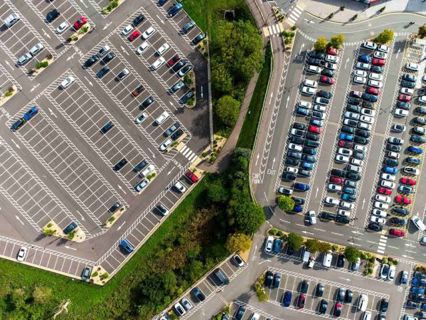
Rapid urban development across Gulf Cooperation Council countries is changing the way cities approach parking and mobility infrastructure. Expanding commercial districts, mixed-use developments, tourism destinations, and residential communities are placing greater pressure on conventional parking facilities. Smart parking systems are increasingly becoming part of broader urban planning strategies, helping cities organize available spaces, manage vehicle movement, and create more connected transportation environments.
Digital technologies are giving parking operators and urban authorities greater visibility into how parking facilities are used. Sensors, connected payment terminals, mobile applications, and automated identification tools can provide timely information about space availability and vehicle movement. Growing interest in intelligent parking infrastructure across GCC cities reflects a wider shift toward data-supported mobility management and digitally coordinated public services.
The GCC Smart Parking Systems Market is also developing alongside smart city programs and changing urban mobility requirements. According to the analysis published by MarkNtel Advisors, the sector is projected to expand from around USD 269 million in 2026 to USD 371 million by 2032, with an estimated CAGR of approximately 5.5% during 2026–2032. These figures indicate a gradual transition toward connected parking technologies as urban environments become more complex.
Urban Expansion Is Creating New Parking Challenges
Population concentration and large-scale property development can make parking management increasingly difficult in busy urban districts. When drivers lack clear information about available spaces, vehicles may circulate through surrounding roads while searching for parking. This additional movement can affect traffic flow, access to commercial areas, and the overall experience of navigating dense city environments.
Municipal parking programs are beginning to address these challenges through structured and technology-supported systems. Riyadh Municipality states that its parking initiative uses technologies including electronic payment machines, smart guidance signboards, and a digital application for payments and permits. The project is intended to improve mobility and reduce random parking practices, illustrating how parking management can form part of a wider smart-city approach.
IoT Sensors Are Improving Space Visibility
The Internet of Things, commonly known as IoT, connects physical devices so they can collect and exchange information. In parking environments, connected sensors may detect whether individual spaces are occupied and communicate that status to a central management platform. This creates a more dynamic view of parking availability than manual inspections or static signage can provide.
Real-time space information can support several parts of parking operations. Drivers may receive guidance toward available zones, while operators can identify heavily used facilities and recurring occupancy patterns. Over time, historical data can also help property managers and city planners understand peak periods, evaluate capacity requirements, and make more informed decisions about how existing parking assets are managed.
Mobile Platforms Are Changing the Driver Experience
Smart parking is increasingly connected with mobile-based services. A parking application may allow users to locate facilities, review availability information, complete digital payments, or manage permits through a single interface. By reducing dependence on physical payment processes and fragmented information, these platforms can make parking interactions more consistent for residents, commuters, and visitors.
Digital parking services are particularly relevant in cities where broader government and municipal functions are moving toward connected platforms. Riyadh's digital transformation strategy describes a vision focused on developing a modern smart city and improving operational efficiency through appropriate technologies. Parking platforms fit within this broader digital environment when they are integrated thoughtfully with urban services and mobility planning.
Automation Is Supporting More Efficient Operations
Automation is another important element of modern parking management. License plate recognition, automated access controls, digital payment validation, and centralized monitoring can reduce reliance on repetitive manual processes. These technologies may also help operators maintain more consistent records of vehicle entry, exit, and parking duration, depending on the design and governance of the system.
For commercial buildings, airports, shopping destinations, hotels, and mixed-use developments, automated parking tools can support the management of high vehicle volumes. Centralized dashboards allow operators to observe multiple facilities and identify operational issues from a common platform. The value of these systems increasingly depends on reliable integration between hardware, software, communications networks, and payment technologies.
Data Analytics Is Becoming Central to Parking Planning
Connected parking systems can generate information about occupancy, parking duration, turnover, payment activity, and facility usage. When analyzed responsibly, this data can help operators understand how parking demand changes by location and time. Such insights may support capacity planning, operational scheduling, and the design of parking policies that better reflect actual usage patterns.
Data quality and governance remain important considerations. Smart parking platforms often depend on sensors, applications, cloud systems, and connected infrastructure working together. Authorities and operators therefore need to consider cybersecurity, system reliability, data protection, and interoperability when developing connected mobility services. These factors can influence public confidence and the long-term effectiveness of digitally managed parking infrastructure.
Smart Parking Is Becoming Part of Connected Mobility
The role of parking is gradually moving beyond the management of individual spaces. As GCC cities develop connected transport environments, parking information can potentially interact with navigation platforms, traffic management systems, public transport services, and other digital mobility tools. Better coordination between these systems may help urban planners develop a clearer understanding of how vehicles move through high-demand districts.
Future development will depend on practical deployment, infrastructure readiness, and the ability of different technologies to exchange reliable information. Smart parking cannot independently resolve every urban traffic challenge, but it can provide useful data and operational tools within a wider mobility strategy. For GCC cities pursuing digitally enabled urban development, connected parking systems are likely to remain an important component of more organized and responsive transportation infrastructure.
0 comments
Be the first to comment!
This post is waiting for your feedback.
Share your thoughts and join the conversation.