
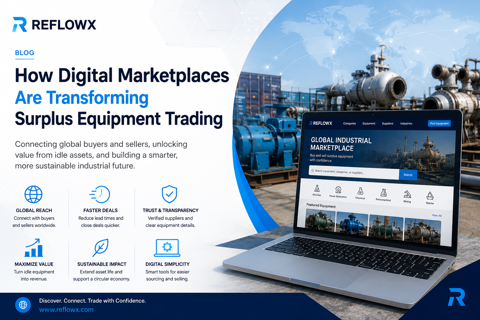
In industries such as oil and gas, power generation, manufacturing, and mining, surplus equipment has traditionally been viewed as a byproduct of changing business priorities. Whether caused by project cancellations, facility upgrades, excess inventory, or plant closures, valuable equipment often sits unused in warehouses and storage yards for years.
For decades, buying and selling these assets relied heavily on personal networks, brokers, trade shows, and lengthy negotiations. While these methods served the industry well in the past, they were often slow, geographically limited, and lacking in transparency.
Today, that landscape is changing.
Digital marketplaces are reshaping the way businesses trade surplus industrial equipment, creating new opportunities for buyers and sellers around the world.
The Traditional Challenges of Surplus Equipment Trading
Surplus equipment transactions have never been simple. Companies looking to sell idle assets often struggle to find qualified buyers, while procurement teams searching for specific equipment face limited visibility into available inventory.
Some of the most common challenges include:
Limited market reach
Long sales cycles
Lack of pricing transparency
Difficulty verifying suppliers
High transaction costs
Delayed project timelines
As global industries continue to prioritize efficiency and cost optimization, these challenges have highlighted the need for a more connected approach.
The Rise of Digital Marketplaces
Digital marketplaces have emerged as a practical solution to these long-standing issues.
Instead of relying solely on local contacts or intermediaries, businesses can now connect with a global network of buyers and suppliers through online platforms specifically designed for industrial trade.
This shift has transformed surplus equipment from an overlooked asset into a strategic business opportunity.
Expanding Access to Global Buyers
One of the most significant advantages of digital marketplaces is reach.
A compressor sitting idle in one country may be urgently needed for a project thousands of miles away. Previously, connecting those two parties required extensive networking and time-consuming negotiations.
Today, online marketplaces enable sellers to showcase equipment to a worldwide audience, dramatically increasing exposure and improving the chances of finding the right buyer.
For procurement teams, this broader access means more sourcing options and reduced dependency on local availability.
Faster Procurement and Reduced Lead Times
Project delays are costly.
When new equipment comes with long manufacturing lead times, surplus assets can provide an attractive alternative. Digital platforms make it easier to identify available equipment quickly, compare options, and initiate discussions with sellers.
Instead of spending weeks searching through multiple channels, buyers can access relevant listings in one place.
This speed can be particularly valuable during maintenance shutdowns, emergency replacements, and time-sensitive projects.
Greater Transparency and Confidence
Trust plays a critical role in industrial transactions.
Digital marketplaces are increasingly incorporating features that improve transparency, such as:
Detailed equipment specifications
Product photographs
Documentation and certifications
Supplier profiles
Direct communication channels
These tools help buyers make more informed decisions while reducing uncertainty throughout the procurement process.
For sellers, comprehensive listings build credibility and attract more serious inquiries.
Supporting the Circular Economy
Beyond financial benefits, surplus equipment trading contributes to sustainability goals.
Extending the life cycle of industrial assets reduces unnecessary waste and minimizes the environmental impact associated with manufacturing new equipment.
As organizations place greater emphasis on responsible resource management, the reuse and redistribution of equipment align closely with broader circular economy initiatives.
What was once considered obsolete inventory can become a valuable resource for another operation.
Unlocking Value from Idle Assets
Surplus equipment often represents untapped capital.
Rather than allowing equipment to depreciate while occupying valuable storage space, businesses can convert unused assets into revenue through digital channels.
This approach not only improves asset utilization but also strengthens balance sheets and supports more efficient inventory management.
In today's competitive environment, monetizing idle assets has become a strategic advantage rather than an afterthought.
The Future of Surplus Equipment Trading
The industrial marketplace is becoming increasingly digital.
As businesses seek greater efficiency, transparency, and global connectivity, online platforms are expected to play an even larger role in equipment sourcing and asset recovery strategies.
Organizations that embrace these changes can benefit from expanded opportunities, faster decision-making, and stronger supply chain resilience.
The way companies buy and sell surplus equipment is evolving. Those willing to adapt will be better positioned to maximize value, reduce waste, and respond to the changing demands of the modern industrial landscape.
Final Thoughts
Surplus equipment trading is no longer limited by geography, fragmented networks, or lengthy processes. Digital marketplaces are helping businesses connect more efficiently, uncover new opportunities, and rethink the way industrial assets are managed.
For buyers, this means faster access to critical equipment. For sellers, it creates new pathways to unlock the value of idle inventory. And for the industry as a whole, it represents a smarter and more sustainable approach to doing business.
As the industrial sector continues its digital transformation, surplus equipment marketplaces are proving that yesterday's unused assets can become tomorrow's opportunities.
0 comments
Be the first to comment!
This post is waiting for your feedback.
Share your thoughts and join the conversation.