
INTRODUCTION
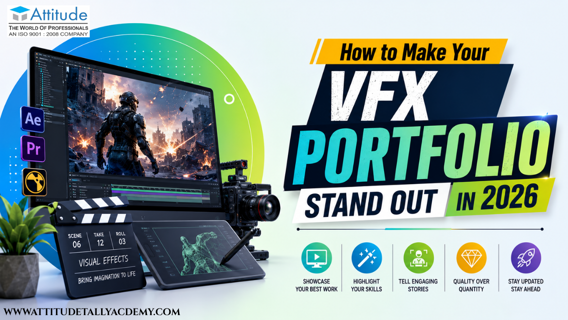
The VFX industry is growing faster than ever, and studios are constantly looking for artists who can demonstrate creativity, technical skills, and problem-solving abilities. Whether you are a beginner or have recently completed your training, building the best VFX portfolio is one of the most important steps towards getting internships, freelance projects, or full-time jobs.
Many students focus only on learning software, but recruiters are more interested in seeing what you can actually create. This is why understanding how to create a VFX portfolio is essential in 2026. A strong portfolio showcases your talent, highlights your strengths, and helps you stand out from hundreds of other applicants.
In this guide, you'll learn practical tips, common mistakes to avoid, and the essential elements every student should include in their VFX portfolio.
Why a VFX Portfolio Matters
Your portfolio is your visual resume. Unlike traditional resumes, it allows employers to judge your creativity, technical knowledge, and attention to detail.
Whether you're applying for an internship, freelance work, or your first job, a professional VFX portfolio for freshers can leave a lasting impression. Studios often spend only a few minutes reviewing each portfolio, so making those minutes count is crucial.
How to Build a VFX Artist Portfolio That Gets Attention
If you're wondering how to build a VFX artist portfolio, start with quality instead of quantity. Recruiters prefer seeing five excellent projects rather than twenty average ones.
Here are some proven strategies:
1. Showcase Your Best Work First
Your strongest project should always appear first. If your first project impresses recruiters, they are more likely to continue exploring the rest of your work.
2. Include Different Types of Projects
A portfolio that demonstrates versatility always stands out. Include projects like:
Green screen compositing
Motion tracking
3D integration
Rotoscoping
CGI scenes
Explosion or fire simulations
Matte painting
Character compositing
These are excellent VFX portfolio projects for beginners because they demonstrate multiple technical skills.
VFX Portfolio Ideas for Students
Finding project ideas can be difficult when you're just starting. Here are some practical VFX portfolio ideas for students:
Replace a movie background using chroma key.
Create a realistic sci-fi scene.
Add visual effects to a short action sequence.
Design magical effects for fantasy videos.
Build realistic weather simulations.
Remove unwanted objects from footage.
Create destruction or explosion effects.
Produce cinematic title sequences.
These projects also help strengthen your VFX training portfolio by showing practical application of classroom concepts.
What to Include in a VFX Portfolio
Many beginners ask what to include in a VFX portfolio. A complete portfolio should contain:
A short personal introduction
Your best 5–10 projects
Before-and-after comparisons
Project breakdowns explaining your workflow
Software used for each project
Demo reel
Contact information
Resume or CV
LinkedIn or portfolio website links
A well-organized VFX course portfolio gives recruiters confidence in your technical abilities and professionalism.
Create a Powerful Demo Reel
One of the biggest factors that separates average portfolios from excellent ones is a VFX portfolio with demo reel.
Your demo reel should:
Be between 60–90 seconds
Start with your strongest shots
Include only polished work
Show different VFX techniques
End with your contact information
Recruiters often watch demo reels before reviewing individual projects.
Build a Portfolio for Jobs, Placements, and Internships
Your portfolio should be tailored to your career goal.
VFX Portfolio for Placement
If you're preparing a VFX portfolio for placement, focus on academic projects that demonstrate your technical growth. Include detailed project explanations because placement recruiters appreciate learning potential.
VFX Portfolio for Internship
A VFX portfolio for internship doesn't require professional experience. Instead, showcase learning projects, personal experiments, and software proficiency.
VFX Portfolio for Job Interview
When preparing a VFX portfolio for job interview, be ready to explain every project. Employers often ask questions about challenges you faced and how you solved them.
Learn from VFX Portfolio Examples for Freshers
Looking at VFX portfolio examples for freshers can help you understand industry expectations. Observe how successful portfolios present projects, organise content, and explain creative decisions.
However, never copy another artist's work. Use examples only for inspiration while developing your own style.
Best VFX Portfolio Tips for 2026
Here are some best VFX portfolio tips that every student should follow:
Focus on quality instead of quantity.
Keep your portfolio updated regularly.
Use high-resolution images and videos.
Organise projects neatly.
Include project breakdowns.
Add only original work.
Learn storytelling along with technical skills.
Optimise your online portfolio for mobile viewing.
Maintain consistent branding.
Keep improving your demo reel every few months.
These practices help you create one of the best VFX portfolio presentations that recruiters enjoy reviewing.
VFX Portfolio Mistakes to Avoid
Even talented students lose opportunities because of avoidable mistakes.
Some common VFX portfolio mistakes to avoid include:
Including unfinished projects
Uploading low-quality renders
Using copyrighted assets without permission
Adding too many similar projects
Poor organisation
Missing contact details
Ignoring spelling and grammar
Creating overly long demo reels
Using outdated software screenshots
Avoiding these errors immediately improves your portfolio's professionalism.
VFX Portfolio Checklist
Before sending your portfolio, go through this simple VFX portfolio checklist:
✔ Demo reel included
✔ Best project appears first
✔ Original work only
✔ High-quality renders
✔ Project descriptions added
✔ Contact information available
✔ Resume attached
✔ Portfolio works on mobile devices
✔ Grammar checked
✔ Updated with latest projects
Your VFX Portfolio After Course Completion
Many students stop building their portfolio after completing training, but continuous improvement is essential.
A strong VFX portfolio after course should include freelance work, personal projects, competitions, and advanced experiments. Every new project reflects your growing skills and commitment to learning.
Over time, your student work evolves into a professional portfolio that attracts better career opportunities.
Final Thoughts
Creating a professional VFX portfolio is not about adding the most projects—it's about presenting your best work in the smartest way. Whether you're building your first VFX institute portfolio, preparing for campus placements, applying for internships, or attending job interviews, your portfolio should reflect your creativity, technical knowledge, and passion for visual effects.
Take time to improve every project, keep learning new techniques, and update your portfolio regularly. With the right approach, consistent practice, and a well-crafted presentation, your VFX portfolio can become the key to exciting opportunities in the growing visual effects industry in 2026 and beyond.Visit us
Suggested link :-
attitudeacademyさんをフォローして最新の投稿をチェックしよう!
0 件のコメント
この投稿にコメントしよう!
この投稿にはまだコメントがありません。
ぜひあなたの声を聞かせてください。