
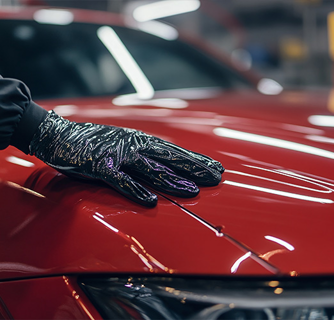
Your vehicle’s paintwork faces constant exposure to environmental hazards such as ultraviolet (UV) rays, road debris, bird droppings, tree sap, dust, and harsh weather conditions. Over time, these elements can dull the finish, create scratches, and reduce the overall appearance and value of a car. This is why advanced paint protection solutions have become increasingly popular among vehicle owners who want to preserve their car's showroom shine.
Among the most effective solutions available today are car film paint protection systems and car ceramic coating technologies. Both are developed using advanced scientific principles and innovative materials designed to protect automotive paint surfaces from damage while enhancing appearance.
Understanding Modern Automotive Paint Systems
Before exploring paint protection technologies, it is important to understand how modern automotive paint systems are structured.
Most modern vehicles have multiple paint layers:
Metal or composite body panel
Primer layer
Base color coat
Clear coat
The clear coat is the outermost protective layer that gives the vehicle its glossy finish. Although it provides some protection against environmental damage, it remains vulnerable to scratches, oxidation, chemical contamination, and UV degradation.
The Evolution of Paint Protection Technology
Paint protection has come a long way from traditional waxes and sealants.
Traditional Wax Protection
For decades, car owners relied on natural or synthetic wax products to create a temporary barrier against contaminants. While wax improved shine and water repellency, its protection typically lasted only a few weeks or months.
Synthetic Sealants
The next advancement came in the form of synthetic paint sealants. These products offered improved durability compared to wax and created a stronger bond with the paint surface.
Advanced Nanotechnology
Modern paint protection solutions utilize nanotechnology, polymer engineering, and advanced chemical formulations that provide significantly greater protection and longevity than older methods.
These innovations have transformed vehicle maintenance and appearance preservation.
What Is Paint Protection Film Technology?
Paint Protection Film (PPF) is a transparent thermoplastic urethane film applied directly to painted surfaces.
Originally developed for military applications to protect helicopter rotor blades from debris damage, the technology eventually found its way into the automotive industry.
Today's PPF products are engineered using sophisticated material science to create nearly invisible protective barriers.
Key Components of Paint Protection Film
Modern films typically consist of multiple layers:
Top Coat Layer
The top layer is designed to resist stains, discoloration, and UV damage. It also contributes to the self-healing properties found in premium films.
Polyurethane Layer
This flexible layer absorbs impacts from road debris, stones, and minor abrasions.
Adhesive Layer
A specially formulated adhesive securely bonds the film to painted surfaces while allowing professional removal without damaging the paint.
How the Film Protects Paint
When road debris strikes the vehicle, the film absorbs and disperses impact energy.
Instead of the force reaching the paint surface directly, the film acts as a sacrificial barrier that reduces or prevents damage.
This protective mechanism significantly lowers the risk of:
Stone chips
Minor scratches
Road rash
Surface abrasions
The Science of Self-Healing Technology
One of the most fascinating innovations in paint protection film is self-healing technology.
How Self-Healing Works
Premium films contain elastomeric polymers capable of returning to their original shape after experiencing minor surface scratches.
When exposed to heat from sunlight, warm water, or ambient temperatures, the polymer molecules rearrange themselves and close shallow scratches.
This process occurs because the molecular structure possesses elastic memory properties that allow it to recover from minor deformations.
Benefits of Self-Healing Films
Self-healing capabilities help maintain a flawless appearance by:
Reducing visible swirl marks
Eliminating light scratches
Preserving gloss levels
Extending film lifespan
This technology significantly reduces the need for paint correction procedures.
Understanding Nanotechnology in Surface Protection
Nanotechnology plays a major role in modern vehicle protection systems.
A nanometer is one-billionth of a meter, making nanoparticles incredibly small. Scientists use these microscopic particles to create highly durable protective surfaces.
Why Nanotechnology Matters
The small size of nanoparticles allows them to interact closely with microscopic imperfections in automotive paint.
They can create a smoother and more uniform protective layer than conventional products.
This results in:
Improved durability
Better water repellency
Increased chemical resistance
Enhanced gloss
The ability to engineer protection at the molecular level has revolutionized automotive surface care.
The Chemistry Behind Ceramic Coatings
Ceramic coatings represent one of the most advanced paint protection technologies available today.
Unlike waxes that sit loosely on the paint surface, ceramic coatings form a semi-permanent chemical bond with the clear coat.
Silicon Dioxide Technology
Most ceramic coatings contain Silicon Dioxide (SiO₂), which is derived from quartz and other silica-rich materials.
When applied properly, the coating undergoes a curing process that creates a durable protective layer.
The resulting surface becomes significantly more resistant to environmental contaminants.
Molecular Bonding Process
The coating molecules bond to the microscopic pores found within the clear coat.
This creates a tightly connected protective structure that cannot simply be washed away like traditional wax products.
What Does Hydrophobic Mean?
Hydrophobic surfaces repel water.
The molecular structure of advanced coatings creates an extremely low surface energy, making it difficult for water molecules to spread across the surface.
Instead, water forms beads and rolls away easily.
Advantages of Hydrophobic Properties
Hydrophobic protection offers several benefits:
Easier cleaning
Reduced water spotting
Improved resistance to dirt accumulation
Better visibility during rainy conditions
The self-cleaning effect helps maintain a cleaner vehicle with less effort.
UV Protection and Oxidation Prevention
Sunlight is one of the biggest threats to automotive paint.
Ultraviolet radiation gradually breaks down paint molecules, causing fading, oxidation, and loss of gloss.
How Protection Systems Block UV Rays
Modern protective films and coatings contain UV inhibitors designed to absorb or reflect harmful radiation.
These protective compounds help preserve:
Paint color
Surface gloss
Clear coat integrity
Overall appearance
This scientific approach significantly slows down the aging process of automotive finishes.
Chemical Resistance Technology
Vehicles encounter numerous chemical contaminants daily.
Common examples include:
Bird droppings
Tree sap
Acid rain
Road salts
Industrial fallout
Many of these substances can etch into paint surfaces if left untreated.
Protective Barrier Function
Advanced protection systems create a barrier that reduces direct contact between contaminants and the paint surface.
This protective shield minimizes the likelihood of permanent staining or etching.
Optical Enhancement Science
Paint protection technologies do more than safeguard surfaces—they also improve visual appearance.
Light Reflection Principles
A smoother surface reflects light more uniformly.
When protective films and coatings reduce microscopic imperfections, they enhance the way light interacts with the paint.
This produces:
Greater gloss
Improved depth
Richer color appearance
Enhanced shine
The visual improvement is often one of the most appreciated benefits among vehicle owners.
Comparing Film Protection and Ceramic Coatings
Although both technologies serve protective purposes, they operate differently.
Physical Protection
car film paint protection offers a physical barrier that absorbs impacts and protects against rock chips and scratches.
This makes it particularly valuable for high-impact areas such as:
Front bumpers
Hoods
Fenders
Side mirrors
Surface Protection
car ceramic coating focuses primarily on chemical resistance, UV protection, hydrophobic performance, and enhanced appearance.
While it can reduce minor surface marring, it does not provide the same impact resistance as film technology.
Combining Both Technologies
Many vehicle owners choose to combine car film paint protection with car ceramic coating for maximum protection.
In this approach:
The film protects against physical damage.
The coating enhances hydrophobic performance and ease of maintenance.
Together, they create a comprehensive defense system for automotive paint.
The Future of Paint Protection Technology
Research and development continue to drive innovation within the automotive protection industry.
Emerging technologies include:
Enhanced Self-Healing Materials
Scientists are developing polymers capable of repairing deeper scratches more quickly and efficiently.
Smart Coatings
Future coatings may incorporate advanced sensing capabilities that detect environmental threats and adjust their protective properties accordingly.
Sustainable Materials
Manufacturers are increasingly focusing on environmentally friendly formulations that reduce environmental impact without sacrificing performance.
Improved Durability
Ongoing advancements aim to extend protection lifespans while reducing maintenance requirements.
These innovations promise even greater levels of protection and convenience for vehicle owners in the coming years.
Wrapping Up
Modern paint protection technologies are rooted in sophisticated scientific principles involving chemistry, polymer engineering, nanotechnology, and material science. These advancements have transformed the way vehicles are protected against environmental hazards, physical damage, and everyday wear.
0 件のコメント
この投稿にコメントしよう!
この投稿にはまだコメントがありません。
ぜひあなたの声を聞かせてください。