
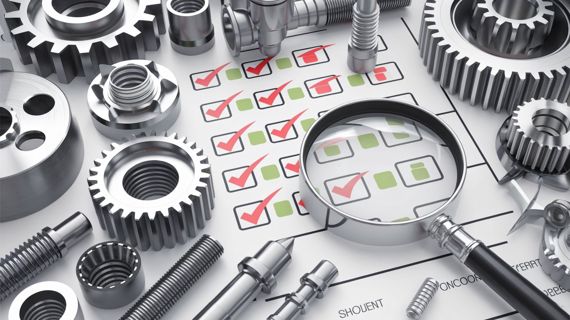
Aerospace manufacturing is one of the most demanding industries in the world. Every component — from a simple bracket to a complex engine part — must meet exacting standards. There is no room for error. A minor defect can cause major safety risks, regulatory failures, and costly production delays.
That is why aerospace manufacturers depend on highly structured quality control processes. From material verification to final inspections, every step is carefully monitored to ensure safety, compliance, and reliability.
This article explains how quality control supports aerospace manufacturing, why precision inspection is critical, and what companies must do to maintain excellence in a highly regulated industry.
Why Quality Control Is Crucial in Aerospace
1. Safety Is Non-Negotiable
In aerospace, quality isn’t optional — it is a safety requirement. Even a small defect can lead to serious consequences. For this reason, aerospace companies implement multi-layered inspection systems to verify material quality, manufacturing processes, and final assembly integrity.
2. Strict Regulatory Compliance
The aerospace sector operates under strict regulatory frameworks. Manufacturers must comply with industry standards that govern material quality, traceability, and manufacturing practices. Failure to meet these standards can lead to penalties, grounding of aircraft, or suspension of certifications.
3. Complex Global Supply Chains
Aircraft components are rarely produced by a single company. Instead, they come from a global network of suppliers. This increases complexity and makes supplier quality management essential.
Key Stages of Aerospace Quality Control
1. Raw Material Inspection
Everything starts with material quality. Inspectors verify:
Material composition
Certifications
Structural integrity
Dimensional accuracy
Defective materials are rejected before entering production.
2. In-Process Inspection
During production, inspectors monitor machining, forming, and assembly processes to ensure they meet design specifications. This helps identify deviations early and prevents large-scale defects.
3. Final Inspection and Testing
Before shipment, parts undergo rigorous inspection. This includes:
Dimensional checks
Functional testing
Visual inspection
Documentation review
Only parts that pass all checks move forward.
Common Challenges in Aerospace Manufacturing
1. Tight Tolerances
Aerospace components require extremely precise measurements. Even microscopic deviations can affect performance and safety.
2. Supplier Variability
Suppliers across different regions may have varying production standards. Maintaining consistent quality across all suppliers is a major challenge.
3. Documentation and Traceability
Every component must have complete documentation. Missing or inaccurate records can cause delays and compliance issues.
The Role of Supplier Quality Management
Supplier quality management ensures that suppliers meet required standards consistently. It includes:
Supplier audits
Process evaluations
Corrective action programs
Continuous monitoring
Companies like Amrep Inspect support aerospace manufacturers by providing on-site inspections, supplier evaluations, and quality control services that help reduce risks and improve performance.
Advanced Inspection Techniques in Aerospace
1. Non-Destructive Testing (NDT)
Techniques like ultrasonic testing, radiographic inspection, and magnetic particle testing help detect internal defects without damaging parts.
2. Precision Measurement Tools
Coordinate measuring machines (CMMs), laser scanners, and optical inspection systems ensure dimensional accuracy.
3. Digital Inspection Systems
Data-driven tools help track defects, analyze trends, and improve decision-making.
How On-Site Inspection Improves Outcomes
On-site inspection provides real-time visibility into production. Inspectors can:
Detect issues immediately
Verify process compliance
Communicate directly with suppliers
Prevent defective parts from leaving the factory
This reduces rework, delays, and cost overruns.
Continuous Improvement in Aerospace Quality
Continuous improvement is essential for maintaining high standards. Many manufacturers adopt methodologies such as:
Lean manufacturing
Six Sigma
Root cause analysis
These approaches help reduce waste, improve efficiency, and enhance product quality.
Best Practices for Aerospace Quality Control
1. Establish Clear Specifications
Detailed engineering drawings and quality requirements help avoid misunderstandings.
2. Conduct Regular Audits
Audits ensure that suppliers maintain required standards.
3. Invest in Skilled Inspectors
Experienced inspectors can identify subtle defects that automated systems may miss.
4. Use Data for Decision-Making
Analyzing inspection data helps identify patterns and prevent recurring issues.
The Future of Quality Control in Aerospace
The aerospace industry is moving toward:
Automation and robotics
AI-powered inspection systems
Predictive analytics
Digital supply chain management
These technologies will improve efficiency, accuracy, and overall reliability.
Conclusion
Aerospace manufacturing demands exceptional precision, strict compliance, and unwavering attention to detail. Quality control plays a central role in ensuring safety, reliability, and performance.
By implementing robust inspection processes, leveraging advanced technologies, and working with experienced quality partners, manufacturers can reduce risks and maintain excellence in a competitive industry.
With deep experience in supplier quality management and manufacturing oversight, Amrep Inspect helps aerospace companies maintain high standards, improve supplier performance, and deliver safe, reliable products.
FAQs
1. Why is quality control so important in aerospace manufacturing?
Because safety, compliance, and performance depend on precise manufacturing and defect-free components.
2. What is non-destructive testing in aerospace?
It refers to inspection methods that detect internal flaws without damaging the component.
3. How does supplier quality management help aerospace manufacturers?
It ensures suppliers meet quality standards, reducing risks and improving consistency.
4. What tools are used for precision inspection?
CMMs, laser scanners, ultrasonic testing, and radiographic systems are commonly used.
5. How does continuous improvement benefit aerospace quality?
It reduces defects, improves efficiency, and ensures long-term reliability.
0 件のコメント
この投稿にコメントしよう!
この投稿にはまだコメントがありません。
ぜひあなたの声を聞かせてください。